Video, January 2, 2014 ISIS Convoy Crossing Border to Iraq (This is more likely in December, see next video on January 1)
Friday, January 10, 2014

Things to Read: Syria, ISIS
Syria Militants Said to Recruit Visiting Americans to Attack U.S.
Breaking Syria's Reign of Terror
Turkish Planes to Syria's Borders After Air Incident
US Considers Resuming Non-Lethal Aid to Syria Rebels
The Battle Between Syria's Rebels and ISIS
Syria's Western Backed Opposition on Brink of Collapse
Breaking Syria's Reign of Terror
Turkish Planes to Syria's Borders After Air Incident
US Considers Resuming Non-Lethal Aid to Syria Rebels
The Battle Between Syria's Rebels and ISIS
Syria's Western Backed Opposition on Brink of Collapse
Thursday, January 9, 2014
Combatting Global Islamic Jihad: Organizational Dysfunction and Rules
When we look at Syria, we see writ large the continuing problems that plague the attempts of al Qaeda and it's various branches, franchises and like minded affiliates. We also see the problems facing the non- Global Islamic Jihad rebel groups, but the focus here is on the Global Islamic Jihad groups (Islamic State of Iraq and al Sham, "ISIS"; Jahbat al Nusrah "JAN").
There's much that can be gleaned by observing the behavior of these groups, within their own organizations as well as within the context of the Global Islamic Jihad movement. It's also important to understand that Global Islamic Jihad is not a huge organization with a structured, accepted hierarchy of leadership nor does it have set rules (policies, procedures and operating guidelines) as we imagine them where everyone knows explicitly what those rules are and works within that frame to achieve a set goal.
Global Islamic Jihad (GIJ) is an idea and a political and social movement that is grounded on a set of religious and mytho-historical beliefs. This would seem to suggest that there are, in fact, set rules or policies (ie, beliefs and morals) that would act as a guide around which people would organize. The problem for the GIJ movement is that they have all but rejected these laws even as they insist that they are defending these rules and seek to implement them in their purest form as was practiced under Mohammed.
Islam itself has a long history of "jurisprudence", legal interpretation, understanding and establishing the laws or "shariah" that are meant to guide not only the faith of Muslims, but their daily lives and how they interact with each other or people outside (non-Muslims) of their community ("Ummah"). These have been built over centuries and have been pondered, debated and set within many writings by recognized renowned scholars.
However, as much as Islam is a monotheistic religion, it is not monolithic. Meaning that within Islam itself there are many schools of thought (jurisprudence) that have produced many orders of Islam, Sufi to Salafi, Twelver to Mahdism. These are also divided further between the two sects of Islam, Sunni and Shia, a schism created after the death of Mohammed when his heirs began to fight over the who should succeed as the Caliph (Kalafah).
While the basic pillars of Islam are accepted across all of these schools of thought, orders and sects, the sharia itself and it's application has been shaped by time, culture and circumstances through the course of history and the many incarnations of the dynastic Caliphates. Each producing it's own school of thought on sharia, based on previous scholastic findings, either refining or abrogating (no longer applicable) laws or teachings of the Sunnah (the ideas within the Quran) and influenced by the time, place, culture and circumstances of the scholar.
In some cases, these ideas were directly challenging to those that were established and accepted by the existing Caliphate and Caliph, resulting in these scholars being declared apostates or enemies of the state. They were either exiled or executed, however, their works continued to influence other scholars throughout the centuries.
Some of those times and circumstances include periods of great expansion when the Caliphate was extended to include much of the Mediterranean basin and numerous countries with other cultures and history. Over this period, many scholars were given access to information, art, music, science and writings of these other cultures including the great works of Greek philosophers like Plato, Socrates and Aristotle. These writings were translated and then often commented on by the Islamic scholars of the day.
Of course, as history and sociology shows, whenever new cultures and ideas are introduced to another, it will impact the annexing culture in small ways and large. Laws, application and practices of faith are adapted to the situation, even if they remain the same at their base. This is true, even in the time of Mohammed, whose various travails and efforts created the numerous Sunnah and Hadith.
So much so that part of the jurisprudence of Islam is the determination of which writings, events and rules are abrogated or clarified by a later event and ruling. Most of which is believed to be settled doctrine, determined and built upon throughout the years by trained scholars although it still raises it's head in many debates.
The GIJ ideology, based on the Salafi order that has been further bifurcated by the Wahhabi sub-order and then merged with ideas written by Sayyid Qutb, is predicated on the belief that the "real sharia" or laws of Islam have been corrupted. This corruption has occurred in many ways and is spelled out among the various writings and sermons of those preaching this puritanical militant idea of Islam.
One of those corruptions is the schism of Islam itself, producing the two sects of Islam. Another is the introduction of "Greek thought" (ie, scholars who had read Greek philosophy and may have inculcated it into their deliberations on Islamic jurisprudence). Then there is "mysticism" or magic of the Sufi order which is considered by the puritans to be close to Satanism (Shayton). This goes on to include the admittance of western ideas through books, movies, art, music, and so on, most terribly by the idea of democracy, or man's law placed above God's law (shariah).
Further corruption of the sharia has been facilitated, they claim, by leaders of Islamic nations either by introducing civil law over sharia (such as Egypt, Ba'athist Iraq, Ba'athist Syria), even when the laws reference or are based on sharia, or when those leaders directly influence those laws, Imams and scholars to maintain their own government or to allow them to do un-Islamic things. Some examples would include making or taking loans with non-Islamic nations outside of sharia law that prohibits usury (interest) or, the largest complaint, allowing a non-Islamic army, the United States and various western nations, to "occupy" Islamic lands. Most particularly, the Holy Lands in Saudi Arabia that contain the holiest of places like the Kabbah in Mecca and Mohammed's tomb.
Based on the GIJ ideology, they claim they are not rejecting the laws of sharia or the four schools of jurisprudence accepted by Sunni Islam (the base of Salafism), but are rejecting the "corruption" and returning to the basic laws of sharia. The problem is that all of these laws, as noted, were developed over time and influenced by time, place and circumstances. Meaning that defining exactly what, how and when this corruption took place is difficult to fully establish. Particularly when no modern scholar or imam, even those within or claiming to support this ideology, can agree fully with another on the law.
This is further complicated by the fact that the militant cadres of the ideology in the field have even less understanding of Islamic sharia or its development. Even if they are raised in the Muslim faith, go to sermons regularly, were educated in a madrasah (Islamic school) or have set through multiple indoctrinations. Many who have flocked to the call of jihad have had very little of any of these and their indoctrination to the ideology is facilitated by members of their group in the field who have more or less of this limited training.
To get around this confusing dichotomy of what they believe, the ideas of Islam have been stripped down to the barest concepts and then enforced in the areas they control and with each other. When people should pray, how they should pray, what they can eat or drink or wear or say or whom they may associate with and when, that they cannot smoke and so on. When met with complex situations, they will resort to a saying or teaching of the Prophet, most often very short verses presented in Maximalist terms.
In its seeming simplicity, it suggests that, yes, each member or adherent will be able to explicitly know the rules by which they should behave and operate. However, every human endeavor and interaction is fraught with complexities and nuances. Attempting to apply these rules, particularly in areas or within groups that have not been fully inculcated to the ideology or the rules fully developed, results in one of two actions. First, resorting to the minimalist and harshest terms, causing friction and continued conflict or, second, attempting to apply their own interpretation or judgment of the rules, again resulting in conflict or confusion as this may be different than what has been historically accepted, built on the jurisprudence or judicial rulings that the ideology has essentially rejected as "corrupt".
This has further implications as instead of creating a linear set of rules and actions that are routinely enforced and followed, that can be explicitly known by all followers, each sub-group within the set creates it's own rules and guidelines. Although they may be based on a similar understanding of the basic laws of Islam, they digress in minute and greater ways so that when these groups must cooperate or rely on some judgment to settle a disagreement, none feel obligated to accept or follow the decisions or adhere to an agreement or be decided on a case by case basis.
The groups and events in Syria are an excellent example of this dichotomy of ideology and actions created by the diverse understanding of the rules and their application. An ironic effect of the ideology as the original intent was to weed out and destroy these very kinds of "corruption" of sharia. Some examples follow:
ISIS, JAN and various unaffiliated Salafist and Islamic groups (like Ahrar al Sham) had agreed to set up joint sharia courts that would make decisions on a plethora of issues, from local disputes between civilians within the administered areas to disagreements between individuals or groups of the mujahedeen. One of the charges laid against ISIS by the other groups is that, even though ISIS agreed to the establishment of these courts, they refused to abide by the rulings or refused to attend the courts even when summoned.
A recent example was the killing of a doctor and popular commander of Ahrar al Sham after ISIS had over run the position. The first problem was that ISIS had over run the position of an associated group without any warning, agreement or explanation which is a violation of basic principles of sharia and their own ideology which requires such a warning. This was not the first time it had happened and the previous events had caused friction between the groups even as they continued to generally cooperate. Ahrar al Sham demanded that the killers be turned over and brought before the sharia court for judgment.
ISIS refused to cooperate. ISIS had their own issues with Ahrar al Sham including the possibility that some sub-groups within the organization had also been involved in the killing of ISIS members. However, instead of abiding by the agreement for the use of courts which would have provided some basis of justice between the two groups, ISIS refused and, in essence, rejected the sharia court's legitimacy. This may be for completely political or strategic reasons, but shows that the ideology and rules these groups profess can be suborned whenever necessary and further indicates that the rules (sharia) are, indeed, flexible which goes against the heart of the ideology itself.
Another example, played out on social media, is the question of what qualifies as "martyrdom". During the recent events, as ISIS was being pushed back, the group used a series of VBIEDs (car bombs; vehicle bound improvised explosive devices) against positions of their opposition which included a JAN base. JAN being the closest ideological affiliate of ISIS and having pledged bayat or allegiance to Zawahiri, recognized leader of al Qaeda and the recognized founder of the current Global Islamic Jihad.
The ISIS social media announced these as "martyrdom" attacks (suicide car bombs). This caused an immediate backlash amongst the other jihad social media community. Martyrdom is believed to be "creating justice", most importantly in the defense of Islam and the Ummah and against infidels and apostates. Those who achieve martyrdom are believed to be immediately forgiven all sins and accepted into Jannah (paradise). They may also achieve forgiveness and paradise for a varying number of their immediate family.
This idea is at the base of preparing would be martyrs for suicide attacks and recruiting future martyrs. The problem arose because JaN and Ahrar al Sham are actually adherents or fellow travelers to the ideology, the accepted kind of Muslims who are supposedly following "the right path" of Islam. Thus, these attacks may have risen out of a dispute among the various groups, but, according to the debaters, could not be considered "martyrdom" because it was only defense of one group among the many professors, not Islam or the greater Ummah. Furthermore, that these tactics should not be used as they did not meet the criteria based on their understanding of the sharia, thus, the perpetrator was not a martyr.
Those on the opposite side of the debate objected saying that it was a tactic among many, that ISIS was under attack and, therefore, was allowed to use whatever means necessary to defend itself making the suicide attacker a martyr in defense of his group. However, this point was apparently taken very seriously as later another VBIED attack was announced against a base but emphasized that the attack was NOT a suicide (martyrdom) event, but remotely detonated.
Through this we can see how the lack of explicit knowledge of the rules effects how each group operates, that they must actually consult some aspect of the rules (sharia) that they claim are corrupt for guidance or, as what seems to be the case here, make a decision based on their own limited knowledge. We can also see the moderating effects of these decisions, far away from any other leadership, the practitioners are forced to come to an accommodation between necessity and belief.
Equally important may be the even wider effect of this action and discussion. Many martyrdom operations are carried out against largely civilian targets and mostly Muslims are killed. The GIJ groups and supporting religious scholars have justified these acts by claiming that any "innocent" Muslim that is killed along with the suicide attacker, will also be pardoned and rewarded with paradise.
But, here, they have created an opening within their own ideology and understanding of sharia by suggesting that there is, in fact, a difference between victims and that difference decides whether the act "creates justice", who is a "martyr" and whether there is a concomitant reward for the act. More importantly, it seems to suggest that, although their ideology claims all Muslims as those they defend, that the mujahedeen are set apart or above the greater Ummah. More important than the rest and subject to different rules.
In addition, if the situation continues and other events occur that raises the question of what is an act of martyrdom, it may cause doubt about the legitimacy of an operation and dissuade some potential recruits from committing the acts. How far this debate may be felt is yet to be discovered, but the immediate reaction seems telling. Putting pressure on this point may have positive results.
The effect of this inability to express, understand and proliferate the explicit knowledge of these rules on the ability to organize and become more effective, as both a socio-religio-political movement as well as operational force, is profound. The basic understanding and explicit knowledge of rules is how organizations remain cohesive and it's members move together to reach a determined goal. When lower subsets of an organization or partner organizations may agree on the over all goal, but cannot agree on what the rules or steps are to achieve these goals, friction occurs and may result in conflict between different groups or, in this case, disintegration of any alliance that could have produced a larger, more capable organization.
This is, of course, a continuing issue for the movement and each of these organizations wherever they spring up. From al Shabaab in Somalia, to AQIM in the Magrehb, to ISIS and JAN in Syria and all the way to Al Qaeda in Pakistan attempting to organize these forces towards the greater goal.
It also has an impact on leadership where the setting of rules and their explicit knowledge are dependent solely on the group and it's leaders. The leader of each group becomes the arbiter of the rules, not the ideology itself or any interlocutors, such as scholars or Imams who issue fatwas or judgments, but who are then either obeyed or rejected depending on the individual acceptance of the group and it's leadership.
This means that all authority, capability and operational direction largely begins and ends with the leadership of each group. Cohesion of any group or groups is dependent on the abilities of that leader, not on the binding understanding of the ideology itself or on any greater organization or leader, devolving all power back to the local organizations. Meaning also that any ability to form a cooperative between organizations or merge into a larger organization is also completely dependent on the local commanders abilities whose motivations may differ significantly.
This is also seen in Syria where JAN's leadership gave bayat to Zawahiri in order to establish it's independence from ISIS and had proclaimed itself the sole representative in Syria. An attempt to cut off ISIS and it's much larger goal to establish transnational "state" and represents another moment where the explicit understanding of rules and strategic goals diverge.
The Global Islamic Jihad ideology expresses an over all goal of establishing a transnational caliphate. In 2005, Zawahiri had written to Zarqawi, nominal leader of ISIS predecessor AQI, urging him to create a network across the area known as Al Sham (the Levant). Post Zarqawi and Omar al Baghdadi, another leader that had met his demise, the current leader of ISIS had determined this direction to mean setting up the first transnational "caliphate", crossing Iraq and Syria's borders.
JAN believed that it's roll was to establish an Islamic state within Syria that would then work with it's neighboring "Islamic state" as a cooperative within the caliphate. Each having it's own leadership and area of control. This demonstrates not only an ideological division, but a strategic one. When ISIS did not agree, JAN appealed to Zawahiri for a ruling. Zawahiri sent a representative who was to make a ruling on his behalf.
The follow on ruling stated that JAN was in charge of Syria and that ISIS was responsible for Iraq, that ISIS should assist JAN in achieving it's goals. This appeared to make ISIS and it's leadership only equal to or even subordinate to JAN and it's leadership in Syria. The decision was strategic in purpose as events had suggested that as long as JAN and the war remained a local event and Syrian in nature, outside powers would be less likely to intervene, giving the al Qaeda linked group a chance to actually establish a base. At the same time, as long as ISIS was an Iraqi group and continued to work within the Sunni population there, it could also expand it's base and control.
Due to the advent of independent decision making evoked by the ideology and devolved leadership of the movement as described above, ISIS was free to agree or disagree with the ruling. It disagreed, remaining in Syria and routinely challenging JAN, Ahrar al Sham and the other non-aligned groups creating continued conflict until it resulted in ISIS' expulsion.
This represents a significant weakness in the movement itself and may create the manner of the movements own demise. The independent decision making, fostered by the clandestine nature of the movement, it's necessity for security of any leadership that could carry authority, and by the ideology itself which has rejected the accepted jurisprudence of sharia as corrupt, creates an ever churning and self-destructive cycle. Whereby organizations may rise as the concept of the ideology spreads, but their capability to reach the final goal remains beyond reach.
On the other hand, it cannot be ignored that this did accomplish both JAN's and Zawahiri's deputy's determination of a better strategy. It also took place during a significant moment of conflict between the Iraqi government and the Sunni tribes in the Anbar province giving ISIS an opportunity to expand it's influence again. However, this determined localization of the groups and their goals also provides a better opportunity to oppose them through our own localized efforts.
Further opportunities may be determined by understanding and exploiting the issues of lack of universal or coherent ideology and rules hindering organizational "explicit knowledge", devolved localized leadership and the open expressions of doubt on social media.
There's much that can be gleaned by observing the behavior of these groups, within their own organizations as well as within the context of the Global Islamic Jihad movement. It's also important to understand that Global Islamic Jihad is not a huge organization with a structured, accepted hierarchy of leadership nor does it have set rules (policies, procedures and operating guidelines) as we imagine them where everyone knows explicitly what those rules are and works within that frame to achieve a set goal.
Global Islamic Jihad (GIJ) is an idea and a political and social movement that is grounded on a set of religious and mytho-historical beliefs. This would seem to suggest that there are, in fact, set rules or policies (ie, beliefs and morals) that would act as a guide around which people would organize. The problem for the GIJ movement is that they have all but rejected these laws even as they insist that they are defending these rules and seek to implement them in their purest form as was practiced under Mohammed.
Islam itself has a long history of "jurisprudence", legal interpretation, understanding and establishing the laws or "shariah" that are meant to guide not only the faith of Muslims, but their daily lives and how they interact with each other or people outside (non-Muslims) of their community ("Ummah"). These have been built over centuries and have been pondered, debated and set within many writings by recognized renowned scholars.
However, as much as Islam is a monotheistic religion, it is not monolithic. Meaning that within Islam itself there are many schools of thought (jurisprudence) that have produced many orders of Islam, Sufi to Salafi, Twelver to Mahdism. These are also divided further between the two sects of Islam, Sunni and Shia, a schism created after the death of Mohammed when his heirs began to fight over the who should succeed as the Caliph (Kalafah).
While the basic pillars of Islam are accepted across all of these schools of thought, orders and sects, the sharia itself and it's application has been shaped by time, culture and circumstances through the course of history and the many incarnations of the dynastic Caliphates. Each producing it's own school of thought on sharia, based on previous scholastic findings, either refining or abrogating (no longer applicable) laws or teachings of the Sunnah (the ideas within the Quran) and influenced by the time, place, culture and circumstances of the scholar.
In some cases, these ideas were directly challenging to those that were established and accepted by the existing Caliphate and Caliph, resulting in these scholars being declared apostates or enemies of the state. They were either exiled or executed, however, their works continued to influence other scholars throughout the centuries.
Some of those times and circumstances include periods of great expansion when the Caliphate was extended to include much of the Mediterranean basin and numerous countries with other cultures and history. Over this period, many scholars were given access to information, art, music, science and writings of these other cultures including the great works of Greek philosophers like Plato, Socrates and Aristotle. These writings were translated and then often commented on by the Islamic scholars of the day.
Of course, as history and sociology shows, whenever new cultures and ideas are introduced to another, it will impact the annexing culture in small ways and large. Laws, application and practices of faith are adapted to the situation, even if they remain the same at their base. This is true, even in the time of Mohammed, whose various travails and efforts created the numerous Sunnah and Hadith.
So much so that part of the jurisprudence of Islam is the determination of which writings, events and rules are abrogated or clarified by a later event and ruling. Most of which is believed to be settled doctrine, determined and built upon throughout the years by trained scholars although it still raises it's head in many debates.
The GIJ ideology, based on the Salafi order that has been further bifurcated by the Wahhabi sub-order and then merged with ideas written by Sayyid Qutb, is predicated on the belief that the "real sharia" or laws of Islam have been corrupted. This corruption has occurred in many ways and is spelled out among the various writings and sermons of those preaching this puritanical militant idea of Islam.
One of those corruptions is the schism of Islam itself, producing the two sects of Islam. Another is the introduction of "Greek thought" (ie, scholars who had read Greek philosophy and may have inculcated it into their deliberations on Islamic jurisprudence). Then there is "mysticism" or magic of the Sufi order which is considered by the puritans to be close to Satanism (Shayton). This goes on to include the admittance of western ideas through books, movies, art, music, and so on, most terribly by the idea of democracy, or man's law placed above God's law (shariah).
Further corruption of the sharia has been facilitated, they claim, by leaders of Islamic nations either by introducing civil law over sharia (such as Egypt, Ba'athist Iraq, Ba'athist Syria), even when the laws reference or are based on sharia, or when those leaders directly influence those laws, Imams and scholars to maintain their own government or to allow them to do un-Islamic things. Some examples would include making or taking loans with non-Islamic nations outside of sharia law that prohibits usury (interest) or, the largest complaint, allowing a non-Islamic army, the United States and various western nations, to "occupy" Islamic lands. Most particularly, the Holy Lands in Saudi Arabia that contain the holiest of places like the Kabbah in Mecca and Mohammed's tomb.
Based on the GIJ ideology, they claim they are not rejecting the laws of sharia or the four schools of jurisprudence accepted by Sunni Islam (the base of Salafism), but are rejecting the "corruption" and returning to the basic laws of sharia. The problem is that all of these laws, as noted, were developed over time and influenced by time, place and circumstances. Meaning that defining exactly what, how and when this corruption took place is difficult to fully establish. Particularly when no modern scholar or imam, even those within or claiming to support this ideology, can agree fully with another on the law.
This is further complicated by the fact that the militant cadres of the ideology in the field have even less understanding of Islamic sharia or its development. Even if they are raised in the Muslim faith, go to sermons regularly, were educated in a madrasah (Islamic school) or have set through multiple indoctrinations. Many who have flocked to the call of jihad have had very little of any of these and their indoctrination to the ideology is facilitated by members of their group in the field who have more or less of this limited training.
To get around this confusing dichotomy of what they believe, the ideas of Islam have been stripped down to the barest concepts and then enforced in the areas they control and with each other. When people should pray, how they should pray, what they can eat or drink or wear or say or whom they may associate with and when, that they cannot smoke and so on. When met with complex situations, they will resort to a saying or teaching of the Prophet, most often very short verses presented in Maximalist terms.
In its seeming simplicity, it suggests that, yes, each member or adherent will be able to explicitly know the rules by which they should behave and operate. However, every human endeavor and interaction is fraught with complexities and nuances. Attempting to apply these rules, particularly in areas or within groups that have not been fully inculcated to the ideology or the rules fully developed, results in one of two actions. First, resorting to the minimalist and harshest terms, causing friction and continued conflict or, second, attempting to apply their own interpretation or judgment of the rules, again resulting in conflict or confusion as this may be different than what has been historically accepted, built on the jurisprudence or judicial rulings that the ideology has essentially rejected as "corrupt".
This has further implications as instead of creating a linear set of rules and actions that are routinely enforced and followed, that can be explicitly known by all followers, each sub-group within the set creates it's own rules and guidelines. Although they may be based on a similar understanding of the basic laws of Islam, they digress in minute and greater ways so that when these groups must cooperate or rely on some judgment to settle a disagreement, none feel obligated to accept or follow the decisions or adhere to an agreement or be decided on a case by case basis.
The groups and events in Syria are an excellent example of this dichotomy of ideology and actions created by the diverse understanding of the rules and their application. An ironic effect of the ideology as the original intent was to weed out and destroy these very kinds of "corruption" of sharia. Some examples follow:
ISIS, JAN and various unaffiliated Salafist and Islamic groups (like Ahrar al Sham) had agreed to set up joint sharia courts that would make decisions on a plethora of issues, from local disputes between civilians within the administered areas to disagreements between individuals or groups of the mujahedeen. One of the charges laid against ISIS by the other groups is that, even though ISIS agreed to the establishment of these courts, they refused to abide by the rulings or refused to attend the courts even when summoned.
A recent example was the killing of a doctor and popular commander of Ahrar al Sham after ISIS had over run the position. The first problem was that ISIS had over run the position of an associated group without any warning, agreement or explanation which is a violation of basic principles of sharia and their own ideology which requires such a warning. This was not the first time it had happened and the previous events had caused friction between the groups even as they continued to generally cooperate. Ahrar al Sham demanded that the killers be turned over and brought before the sharia court for judgment.
ISIS refused to cooperate. ISIS had their own issues with Ahrar al Sham including the possibility that some sub-groups within the organization had also been involved in the killing of ISIS members. However, instead of abiding by the agreement for the use of courts which would have provided some basis of justice between the two groups, ISIS refused and, in essence, rejected the sharia court's legitimacy. This may be for completely political or strategic reasons, but shows that the ideology and rules these groups profess can be suborned whenever necessary and further indicates that the rules (sharia) are, indeed, flexible which goes against the heart of the ideology itself.
Another example, played out on social media, is the question of what qualifies as "martyrdom". During the recent events, as ISIS was being pushed back, the group used a series of VBIEDs (car bombs; vehicle bound improvised explosive devices) against positions of their opposition which included a JAN base. JAN being the closest ideological affiliate of ISIS and having pledged bayat or allegiance to Zawahiri, recognized leader of al Qaeda and the recognized founder of the current Global Islamic Jihad.
The ISIS social media announced these as "martyrdom" attacks (suicide car bombs). This caused an immediate backlash amongst the other jihad social media community. Martyrdom is believed to be "creating justice", most importantly in the defense of Islam and the Ummah and against infidels and apostates. Those who achieve martyrdom are believed to be immediately forgiven all sins and accepted into Jannah (paradise). They may also achieve forgiveness and paradise for a varying number of their immediate family.
This idea is at the base of preparing would be martyrs for suicide attacks and recruiting future martyrs. The problem arose because JaN and Ahrar al Sham are actually adherents or fellow travelers to the ideology, the accepted kind of Muslims who are supposedly following "the right path" of Islam. Thus, these attacks may have risen out of a dispute among the various groups, but, according to the debaters, could not be considered "martyrdom" because it was only defense of one group among the many professors, not Islam or the greater Ummah. Furthermore, that these tactics should not be used as they did not meet the criteria based on their understanding of the sharia, thus, the perpetrator was not a martyr.
Those on the opposite side of the debate objected saying that it was a tactic among many, that ISIS was under attack and, therefore, was allowed to use whatever means necessary to defend itself making the suicide attacker a martyr in defense of his group. However, this point was apparently taken very seriously as later another VBIED attack was announced against a base but emphasized that the attack was NOT a suicide (martyrdom) event, but remotely detonated.
Through this we can see how the lack of explicit knowledge of the rules effects how each group operates, that they must actually consult some aspect of the rules (sharia) that they claim are corrupt for guidance or, as what seems to be the case here, make a decision based on their own limited knowledge. We can also see the moderating effects of these decisions, far away from any other leadership, the practitioners are forced to come to an accommodation between necessity and belief.
Equally important may be the even wider effect of this action and discussion. Many martyrdom operations are carried out against largely civilian targets and mostly Muslims are killed. The GIJ groups and supporting religious scholars have justified these acts by claiming that any "innocent" Muslim that is killed along with the suicide attacker, will also be pardoned and rewarded with paradise.
But, here, they have created an opening within their own ideology and understanding of sharia by suggesting that there is, in fact, a difference between victims and that difference decides whether the act "creates justice", who is a "martyr" and whether there is a concomitant reward for the act. More importantly, it seems to suggest that, although their ideology claims all Muslims as those they defend, that the mujahedeen are set apart or above the greater Ummah. More important than the rest and subject to different rules.
In addition, if the situation continues and other events occur that raises the question of what is an act of martyrdom, it may cause doubt about the legitimacy of an operation and dissuade some potential recruits from committing the acts. How far this debate may be felt is yet to be discovered, but the immediate reaction seems telling. Putting pressure on this point may have positive results.
The effect of this inability to express, understand and proliferate the explicit knowledge of these rules on the ability to organize and become more effective, as both a socio-religio-political movement as well as operational force, is profound. The basic understanding and explicit knowledge of rules is how organizations remain cohesive and it's members move together to reach a determined goal. When lower subsets of an organization or partner organizations may agree on the over all goal, but cannot agree on what the rules or steps are to achieve these goals, friction occurs and may result in conflict between different groups or, in this case, disintegration of any alliance that could have produced a larger, more capable organization.
This is, of course, a continuing issue for the movement and each of these organizations wherever they spring up. From al Shabaab in Somalia, to AQIM in the Magrehb, to ISIS and JAN in Syria and all the way to Al Qaeda in Pakistan attempting to organize these forces towards the greater goal.
It also has an impact on leadership where the setting of rules and their explicit knowledge are dependent solely on the group and it's leaders. The leader of each group becomes the arbiter of the rules, not the ideology itself or any interlocutors, such as scholars or Imams who issue fatwas or judgments, but who are then either obeyed or rejected depending on the individual acceptance of the group and it's leadership.
This means that all authority, capability and operational direction largely begins and ends with the leadership of each group. Cohesion of any group or groups is dependent on the abilities of that leader, not on the binding understanding of the ideology itself or on any greater organization or leader, devolving all power back to the local organizations. Meaning also that any ability to form a cooperative between organizations or merge into a larger organization is also completely dependent on the local commanders abilities whose motivations may differ significantly.
This is also seen in Syria where JAN's leadership gave bayat to Zawahiri in order to establish it's independence from ISIS and had proclaimed itself the sole representative in Syria. An attempt to cut off ISIS and it's much larger goal to establish transnational "state" and represents another moment where the explicit understanding of rules and strategic goals diverge.
The Global Islamic Jihad ideology expresses an over all goal of establishing a transnational caliphate. In 2005, Zawahiri had written to Zarqawi, nominal leader of ISIS predecessor AQI, urging him to create a network across the area known as Al Sham (the Levant). Post Zarqawi and Omar al Baghdadi, another leader that had met his demise, the current leader of ISIS had determined this direction to mean setting up the first transnational "caliphate", crossing Iraq and Syria's borders.
JAN believed that it's roll was to establish an Islamic state within Syria that would then work with it's neighboring "Islamic state" as a cooperative within the caliphate. Each having it's own leadership and area of control. This demonstrates not only an ideological division, but a strategic one. When ISIS did not agree, JAN appealed to Zawahiri for a ruling. Zawahiri sent a representative who was to make a ruling on his behalf.
The follow on ruling stated that JAN was in charge of Syria and that ISIS was responsible for Iraq, that ISIS should assist JAN in achieving it's goals. This appeared to make ISIS and it's leadership only equal to or even subordinate to JAN and it's leadership in Syria. The decision was strategic in purpose as events had suggested that as long as JAN and the war remained a local event and Syrian in nature, outside powers would be less likely to intervene, giving the al Qaeda linked group a chance to actually establish a base. At the same time, as long as ISIS was an Iraqi group and continued to work within the Sunni population there, it could also expand it's base and control.
Due to the advent of independent decision making evoked by the ideology and devolved leadership of the movement as described above, ISIS was free to agree or disagree with the ruling. It disagreed, remaining in Syria and routinely challenging JAN, Ahrar al Sham and the other non-aligned groups creating continued conflict until it resulted in ISIS' expulsion.
This represents a significant weakness in the movement itself and may create the manner of the movements own demise. The independent decision making, fostered by the clandestine nature of the movement, it's necessity for security of any leadership that could carry authority, and by the ideology itself which has rejected the accepted jurisprudence of sharia as corrupt, creates an ever churning and self-destructive cycle. Whereby organizations may rise as the concept of the ideology spreads, but their capability to reach the final goal remains beyond reach.
On the other hand, it cannot be ignored that this did accomplish both JAN's and Zawahiri's deputy's determination of a better strategy. It also took place during a significant moment of conflict between the Iraqi government and the Sunni tribes in the Anbar province giving ISIS an opportunity to expand it's influence again. However, this determined localization of the groups and their goals also provides a better opportunity to oppose them through our own localized efforts.
Further opportunities may be determined by understanding and exploiting the issues of lack of universal or coherent ideology and rules hindering organizational "explicit knowledge", devolved localized leadership and the open expressions of doubt on social media.
Wednesday, January 8, 2014
"Twitter Influence and Cumulative Perceptions of Extremist Support: A C" by Gabrielle Blanquart and David M. Cook
"Twitter Influence and Cumulative Perceptions of Extremist Support: A C" by Gabrielle Blanquart and David M. Cook
See this and Propaganda of War... same effect on why ISIS and JAN appeared to be much bigger or more popular in Syria than their actual numbers or ability imply.
See this and Propaganda of War... same effect on why ISIS and JAN appeared to be much bigger or more popular in Syria than their actual numbers or ability imply.
Tuesday, January 7, 2014
Syria and the Propaganda of War: Staring into the Abyss
Three weeks ago, JM Berger, Daveed Garenstein-Ross and Kelsey Atherton spoke about the use of social media for propagating messages and social connections by jihadists in Syria and the Regime. It can be found here and I highly recommend watching the video for insights on the way that social media can be used both for messaging and analyzing messages.
This post is without direct links to media due to time, but wanted to put down a few thoughts on the subject of propaganda and how it can be used to skew information and analysis. Something that was touched on in this post on the Politics of Analysis.
Generally, I watch Twitter and read posts from a variety of sources from professional media, researchers and analysts and, most important, from people within various countries, many of them either political activists or active political commentators. I also like to follow some people who are not active in the political discussions, but post common everyday occurrences. The reason is fairly simple: you can't judge the political nature of a country of interest by the political class alone.
In essence, the political class becomes an echo chamber of the same few ideas and the general population acts as a type of control. When I see political issues enter into the flow of common intercourse, it can be a type of measure for the penetration of a political idea or problem. Admittedly, this is not very scientific, but it does provide for some sanity against the back drop of often exceedingly polarizing, hyperbolic political commentary.
In looking at the Syrian war, I've used a similar method for collecting information by selecting several accounts from multiple groups including ISIS, JAN, Kurds and the SNC/SRF/secular groups. This is where I admit again to not approaching it overly scientifically by insuring an absolute equal number of each. Partly because it is difficult to separate ISIS and JAN sources of information when they often overlap. Or, did, up until the recent split.
Even then, I see the same sources flowing through each of these accounts. Unsurprisingly, often the same media with a slightly different twist to the message. The same sometimes occurs with the Kurd and SNC/SRF accounts, overlapping between each other and even using the same media as ISIS and JAN with an entirely different message. Which shows just how incestuous the world of social media propaganda can be and how it might lead to bad information analysis.
Case in point, a photo was shown by a known ISIS tweeter, ShamiWitness, that portrayed ten men kneeling on the ground and who, according to this tweeter, were Assad regime soldiers that were soon after executed. All of the men had beards. Which apparently gave the ISIS tweeter a moment of pause because he pointed it out himself and insisted that, in the times of war, even Assad's men could not shave or that beards were simply popular.
This photo was later passed around by the secularist Syrian rebel supporters indicating that the men were, in fact, from Ahrar al Sham and that ISIS had executed them out of hand.
A short while later, the Kurdish group passed the same picture, this time stating that the men were, in fact, FSA (non-Islamist Jihad) that were executed. The photo was then passed to other secular Syrians who repeated the Kurdish claim.
In the propaganda war, often the first out of the chute shapes the narrative for a larger audience as well as the target audiences. In the case of ShamiWitness, both jihadi sympathizers and a number of other non-jihad rebels to include a very interesting mix of western and Middle East media, researchers and analysts. Some who interact with him occasionally, politely asking for clarification, explanation and even his personal insights.
It's easy to see why ShamiWitness would seem to be an acceptable resource as he generally remains polite, attempts to verify his sources (has even withdrawn some statements as false) and is seemingly correct often enough to warrant the title of a good source of information. Accept when he isn't and, in some cases, must be categorized, not as a source of information, but, in fact, a direct conduit for all sorts of propaganda (even when he is acting as a verifiable source). By that, I mean, that he has actively and knowingly proliferated wrong, misleading or even false information, repetitively as well as acted as a director for funneling the same information to subordinate accounts.
Considering that the above mentioned photo of alleged Assad's soldiers being executed was shown at the height of the infighting between ISIS, JAN, Ahrar al Shame, IF & the SRF groups, it seems very unlikely that Assad soldiers would have been in or near what was clearly rebel controlled territory. It could be that the rumors surrounding the ejection of ISIS, that it was a coordinated effort with Assad's regime and various outside entities, prompted the originator to decry the men as "Assad regime" and Shami simply passed it along. The problem would be the numerous other photos and pieces of bad information that were repeatedly shown even when challenged on good grounds.
Which goes to show that, if anyone is using this media for information or analysis, they have to be as careful, if not more so, when the information is gleaned from any other known affiliated sources. I mention that because it's quite possible, if not probable, that the ability to interact with these sources directly can cause a creeping form of familiarity and trust that skews analysis and objective views.
The non-jihad and "jihad lite" groups are equally as bad, if not often worse, because their efforts are not coordinated or as sophisticated as the ISIS group and they tend to post anything that comes their way that is negative about Assad's actions or the Jihadis whom they revile equally. That's not to say that there isn't any information that can be gleaned from these sources, but the most important information that can be noted is that the ISIS group has a much larger, streamlined and sophisticated propaganda program than the non-jihad or even JAN organizations.
Part of that program is based on very simple marketing techniques: to have "presence"'; be first out with information; provide continuous, repetitive information; have only a few "reputed" sources that funnel the information (particularly, in English when most of the other providers are in Arabic or another language) and give the appearance of being an honest broker of information.
The other groups are not nearly as organized, have multiple people producing and introducing information, can rarely verify from where the original information came and, thru all that, appear to be almost all propaganda (in it's worse sense) and little information. Worse, their interaction with media and others following through twitter or other media are sometimes hostile stemming from a perception that the western media and governments simply do not care what happens to the rest of the population, but only about the presence of the jihad/AQ/ISIS/JAN groups. Groups that they have been insisting for a long time do not represent the much larger body of rebel organizations.
Partly due to their own lack of centralized, trustworthy media representatives, partly because ISIS and JAN do have this kind of source and also because, they are right, the very presence of AQ affiliated or ideological travelers is an attention getter for western media, war analysts and politicos. All of this serves to create a view that ISIS, JAN, etc are the most effective and dominating forces on the battle field. That is what is repeatedly reported and it serves ISIS, JAN, AQ, et al in obtaining recruits, donations and boosting internal moral. Any good military leader will say that good moral is a force multiplier.
Types and forms of propaganda that is being used to perpetuate this idea fall under the categories noted above and include some interesting concepts.
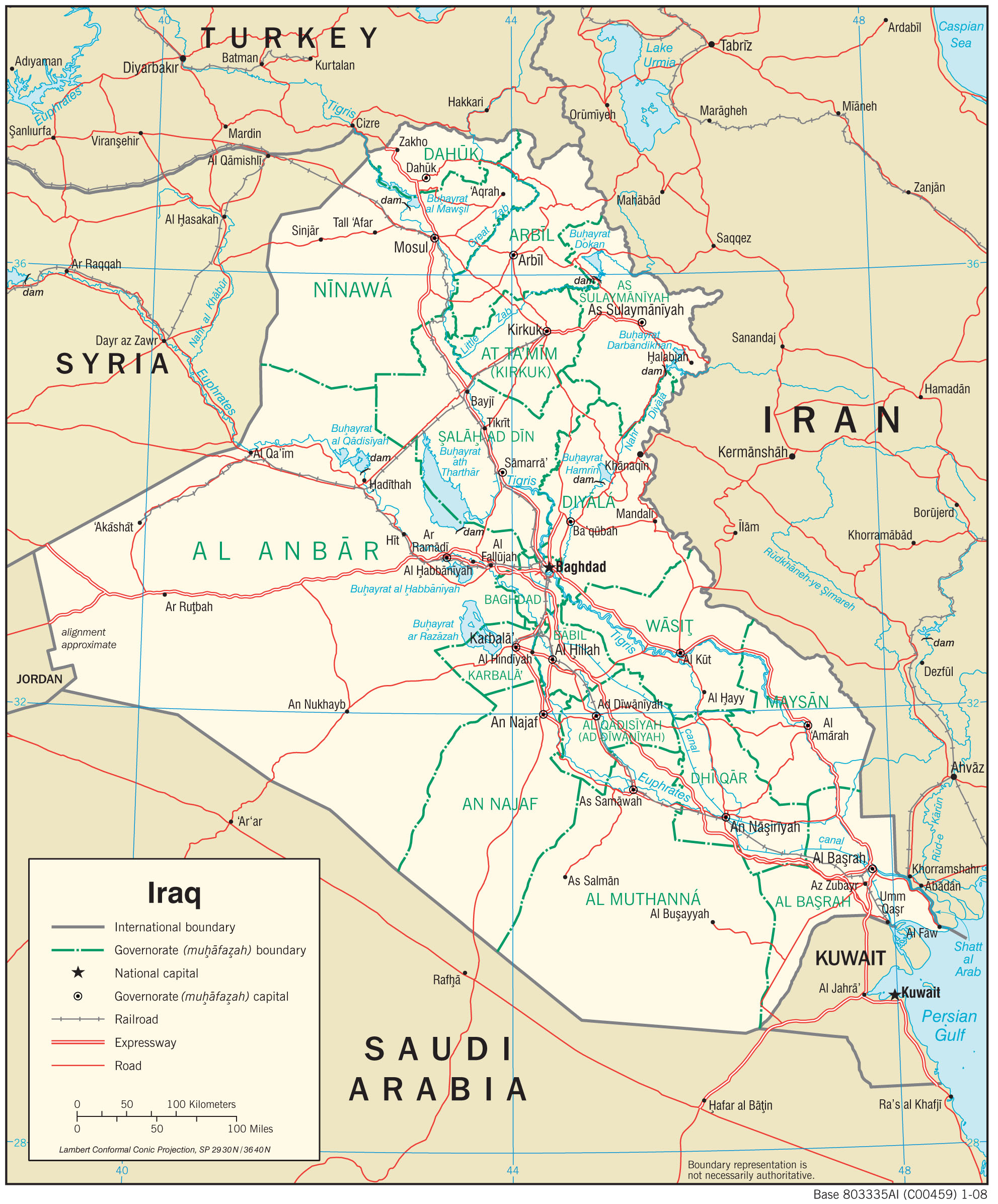
It is and, until the moment the non-ISIS groups began pushing ISIS back towards Iraq, much of the media and "experts" believed that propaganda and were somewhat shocked to find ISIS on the run. The same effect is occurring in Iraq with many headlines trumpeting "Al Qaeda linked militants take over Fallujah". That isn't to say that ISIS isn't in Iraq as that was a position it fell back to, not only to escape the situation in Syria, but to consolidate their grip on territory that was under threat by the Iraq army.
It is to say that the media, experts (barring one, Kirk Sowell at Inside Iraq Politics; @UticensisRisk) and pundits are, once again buying ISIS propaganda as well as that of President Maliki who is calling any Sunni that opposes his government "al Qaeda". When Iraq is a much more complicated situation that has been on going while everyone was watching Syria, Iran, Snowden and various other events.
The lessons in this are:
***Photoshopped pictures of men carrying ISIS flags positioned on some main highway in Iraq. The blurred lines around the flags (attempting to blend into new background), poor cutaways around limbs and obvious appearance of parts of whatever picture it originally came from gave it away.
***Photos previously shown by Iraqi Sunni affiliated media as local tribal fighters later appearing on the ISIS social media sites, re-captioned as "ISIS fighters in Iraq".
All of these attempting to show that ISIS had more men and presence in the area as was their usual propaganda tactic. Given that, it really makes you think that estimations of ISIS having up to 11,000 fighters may be seriously over-estimated.
This post is without direct links to media due to time, but wanted to put down a few thoughts on the subject of propaganda and how it can be used to skew information and analysis. Something that was touched on in this post on the Politics of Analysis.
Generally, I watch Twitter and read posts from a variety of sources from professional media, researchers and analysts and, most important, from people within various countries, many of them either political activists or active political commentators. I also like to follow some people who are not active in the political discussions, but post common everyday occurrences. The reason is fairly simple: you can't judge the political nature of a country of interest by the political class alone.
In essence, the political class becomes an echo chamber of the same few ideas and the general population acts as a type of control. When I see political issues enter into the flow of common intercourse, it can be a type of measure for the penetration of a political idea or problem. Admittedly, this is not very scientific, but it does provide for some sanity against the back drop of often exceedingly polarizing, hyperbolic political commentary.
In looking at the Syrian war, I've used a similar method for collecting information by selecting several accounts from multiple groups including ISIS, JAN, Kurds and the SNC/SRF/secular groups. This is where I admit again to not approaching it overly scientifically by insuring an absolute equal number of each. Partly because it is difficult to separate ISIS and JAN sources of information when they often overlap. Or, did, up until the recent split.
Even then, I see the same sources flowing through each of these accounts. Unsurprisingly, often the same media with a slightly different twist to the message. The same sometimes occurs with the Kurd and SNC/SRF accounts, overlapping between each other and even using the same media as ISIS and JAN with an entirely different message. Which shows just how incestuous the world of social media propaganda can be and how it might lead to bad information analysis.
Case in point, a photo was shown by a known ISIS tweeter, ShamiWitness, that portrayed ten men kneeling on the ground and who, according to this tweeter, were Assad regime soldiers that were soon after executed. All of the men had beards. Which apparently gave the ISIS tweeter a moment of pause because he pointed it out himself and insisted that, in the times of war, even Assad's men could not shave or that beards were simply popular.
This photo was later passed around by the secularist Syrian rebel supporters indicating that the men were, in fact, from Ahrar al Sham and that ISIS had executed them out of hand.
A short while later, the Kurdish group passed the same picture, this time stating that the men were, in fact, FSA (non-Islamist Jihad) that were executed. The photo was then passed to other secular Syrians who repeated the Kurdish claim.
In the propaganda war, often the first out of the chute shapes the narrative for a larger audience as well as the target audiences. In the case of ShamiWitness, both jihadi sympathizers and a number of other non-jihad rebels to include a very interesting mix of western and Middle East media, researchers and analysts. Some who interact with him occasionally, politely asking for clarification, explanation and even his personal insights.
It's easy to see why ShamiWitness would seem to be an acceptable resource as he generally remains polite, attempts to verify his sources (has even withdrawn some statements as false) and is seemingly correct often enough to warrant the title of a good source of information. Accept when he isn't and, in some cases, must be categorized, not as a source of information, but, in fact, a direct conduit for all sorts of propaganda (even when he is acting as a verifiable source). By that, I mean, that he has actively and knowingly proliferated wrong, misleading or even false information, repetitively as well as acted as a director for funneling the same information to subordinate accounts.
Considering that the above mentioned photo of alleged Assad's soldiers being executed was shown at the height of the infighting between ISIS, JAN, Ahrar al Shame, IF & the SRF groups, it seems very unlikely that Assad soldiers would have been in or near what was clearly rebel controlled territory. It could be that the rumors surrounding the ejection of ISIS, that it was a coordinated effort with Assad's regime and various outside entities, prompted the originator to decry the men as "Assad regime" and Shami simply passed it along. The problem would be the numerous other photos and pieces of bad information that were repeatedly shown even when challenged on good grounds.
Which goes to show that, if anyone is using this media for information or analysis, they have to be as careful, if not more so, when the information is gleaned from any other known affiliated sources. I mention that because it's quite possible, if not probable, that the ability to interact with these sources directly can cause a creeping form of familiarity and trust that skews analysis and objective views.
The non-jihad and "jihad lite" groups are equally as bad, if not often worse, because their efforts are not coordinated or as sophisticated as the ISIS group and they tend to post anything that comes their way that is negative about Assad's actions or the Jihadis whom they revile equally. That's not to say that there isn't any information that can be gleaned from these sources, but the most important information that can be noted is that the ISIS group has a much larger, streamlined and sophisticated propaganda program than the non-jihad or even JAN organizations.
Part of that program is based on very simple marketing techniques: to have "presence"'; be first out with information; provide continuous, repetitive information; have only a few "reputed" sources that funnel the information (particularly, in English when most of the other providers are in Arabic or another language) and give the appearance of being an honest broker of information.
The other groups are not nearly as organized, have multiple people producing and introducing information, can rarely verify from where the original information came and, thru all that, appear to be almost all propaganda (in it's worse sense) and little information. Worse, their interaction with media and others following through twitter or other media are sometimes hostile stemming from a perception that the western media and governments simply do not care what happens to the rest of the population, but only about the presence of the jihad/AQ/ISIS/JAN groups. Groups that they have been insisting for a long time do not represent the much larger body of rebel organizations.
Partly due to their own lack of centralized, trustworthy media representatives, partly because ISIS and JAN do have this kind of source and also because, they are right, the very presence of AQ affiliated or ideological travelers is an attention getter for western media, war analysts and politicos. All of this serves to create a view that ISIS, JAN, etc are the most effective and dominating forces on the battle field. That is what is repeatedly reported and it serves ISIS, JAN, AQ, et al in obtaining recruits, donations and boosting internal moral. Any good military leader will say that good moral is a force multiplier.
Types and forms of propaganda that is being used to perpetuate this idea fall under the categories noted above and include some interesting concepts.
- The black flag of ISIS is everywhere, therefore, ISIS is everywhere
- Repeated pictures of an ISIS flag on a building, hill, rock, pole or even supported by two or three men, often with nothing else around it to provide identification of an area or geographical space (It's not always what's in the picture, but what isn't)
- Painting the ISIS flag or other signs on buildings, road signs and streets to mark a wider territory, even if they actually do not have enough men to effectively control that area
- Keeping a tight focus on a group of fighters in a small space to appear to be larger in numbers
- Showing the same few fighters in front of different buildings or streets or even the same areas, but from different angles to make it appear there are more fighters
- Showing the same equipment, captured or in use, from different angles and in different stages to make it appear that more activity is occurring.
- A recent event involved fighters in Iraq who had seized a checkpoint and police vehicle
- According to the repeated tweets from different angles and stages of destruction, these were separate and multiple events
- The give away was the vehicle had very specific markings, dents and ad hoc welded frame on the back that was apparent in each picture, even as it was burning to the ground
- Another give away was the street and buildings; buildings with particular signs ran along one side of the street and the other faced out into a wide barren area, both visible in greater or lesser degrees in each photograph
- In this case, it is what is in the picture that provided the actual story
- Being the first to announce an operation and claiming it for the ISIS organization or led by ISIS or only successful due to ISIS timely intervention
- The other opposition groups not being as timely, prolific or possibly as concerned with the media aspect as it was with actually consolidating it's hold, taking care of wounded or planning the next attack. Or, even that it simply lacks the talent and/or focus for this type of operation.
It is and, until the moment the non-ISIS groups began pushing ISIS back towards Iraq, much of the media and "experts" believed that propaganda and were somewhat shocked to find ISIS on the run. The same effect is occurring in Iraq with many headlines trumpeting "Al Qaeda linked militants take over Fallujah". That isn't to say that ISIS isn't in Iraq as that was a position it fell back to, not only to escape the situation in Syria, but to consolidate their grip on territory that was under threat by the Iraq army.
It is to say that the media, experts (barring one, Kirk Sowell at Inside Iraq Politics; @UticensisRisk) and pundits are, once again buying ISIS propaganda as well as that of President Maliki who is calling any Sunni that opposes his government "al Qaeda". When Iraq is a much more complicated situation that has been on going while everyone was watching Syria, Iran, Snowden and various other events.
The lessons in this are:
- Be skeptical
- The loudest and most persistent voices do not equal truth;
- Watch what is in the pictures;
- Watch what is not in the pictures
- Listen/read what is said
- Listen/read what is not said
- Propaganda is propaganda and means to sway opinions
- It doesn't matter how friendly, helpful, willing or charming the source of information is, there is always an agenda
- Staring into the abyss too long makes it appear that only the abyss exists
***Photoshopped pictures of men carrying ISIS flags positioned on some main highway in Iraq. The blurred lines around the flags (attempting to blend into new background), poor cutaways around limbs and obvious appearance of parts of whatever picture it originally came from gave it away.
***Photos previously shown by Iraqi Sunni affiliated media as local tribal fighters later appearing on the ISIS social media sites, re-captioned as "ISIS fighters in Iraq".
All of these attempting to show that ISIS had more men and presence in the area as was their usual propaganda tactic. Given that, it really makes you think that estimations of ISIS having up to 11,000 fighters may be seriously over-estimated.
Overview of Syria: Split in Jihad
<blockquote class="twitter-tweet" lang="en"><p>Part 1: ISIS Information Ministry new statement posted on the Ansar Al' Mujahideen forum today. <a href="http://t.co/LEVR82EFeE">pic.twitter.com/LEVR82EFeE</a></p>— American Jihad Watch (@Watcherone) <a href="https://twitter.com/Watcherone/statuses/420302454148710400">January 6, 2014</a></blockquote>
<script async src="//platform.twitter.com/widgets.js" charset="utf-8"></script>
<script async src="//platform.twitter.com/widgets.js" charset="utf-8"></script>
Subscribe to:
Posts (Atom)